 STELABEAUTYAPP
Curly hair care for beginners
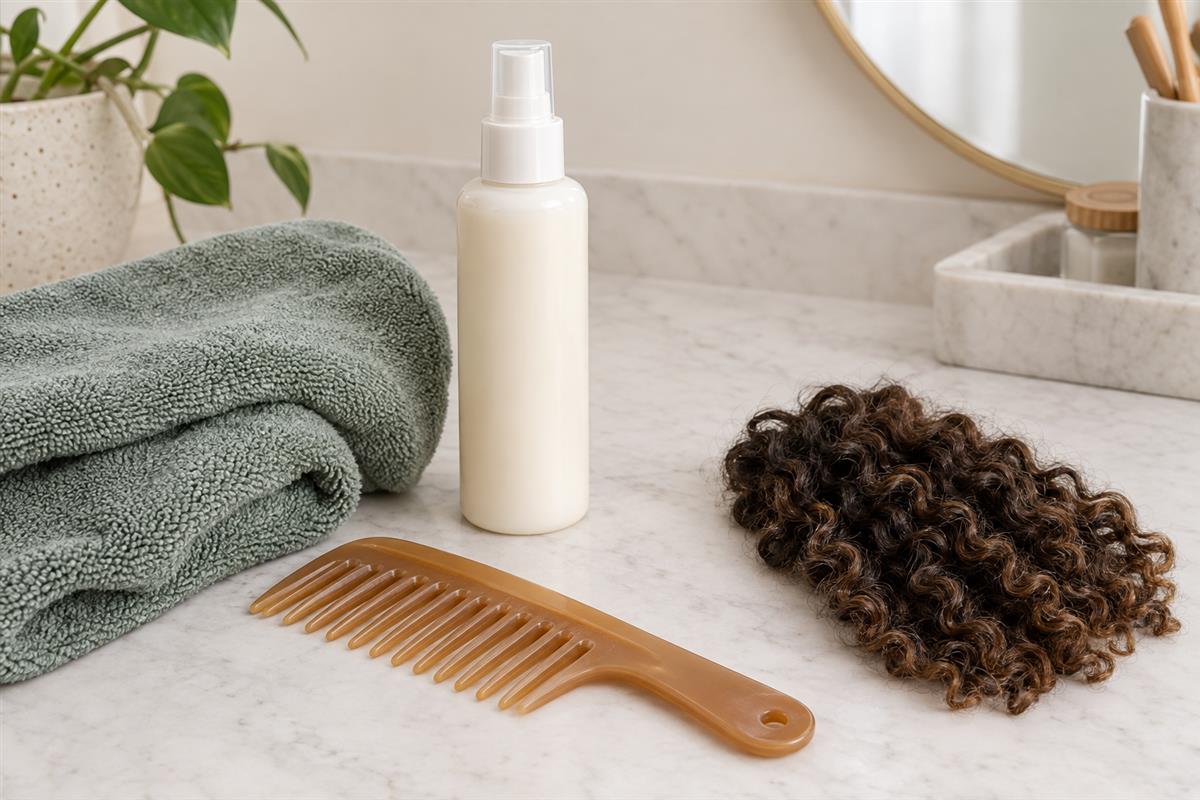
Curly hair can form waves, loops or coils of different sizes, even on the same head. There is no single routine or perfect appearance: the goal is to find habits that keep your hair and scalp comfortable.
This guide offers simple starting steps for trying products gradually and adapting your styling routine to your needs, without requiring you to change your natural texture.
Start with comfortable cleansing
Choose a shampoo you tolerate and follow its directions. Wet your hair thoroughly, distribute the product mainly over the scalp and massage gently with your fingertips without scratching with your nails. Rinse with plenty of water to remove residue.
Frequency depends on your scalp, activities and the products you use. If your roots feel dirty or buildup appears, adjust the schedule; you do not have to follow someone else’s calendar. If washing causes irritation, review the product or consult a professional.
Condition and detangle in sections
If useful, apply conditioner to the lengths and ends according to the label. Divide damp hair into manageable sections and start detangling the ends with your fingers or a wide-tooth comb, gradually working your way upward.
Support the section to avoid pulling at the roots and stop when you encounter a knot. Separate it patiently rather than pulling the comb through. Rinse the conditioner if its label says to do so; a leave-in formula has different instructions.
Read also: How to observe your hair texture: a beginner guide.
Try a simple styling approach
A styling product is optional. If you want to try a cream or gel, read the instructions and distribute a small amount through sections. Some people prefer to apply it to damp hair and gently lift the ends with their hands to encourage the curl pattern.
Let your hair dry and observe the result before adding more. If it feels heavy or has residue, try less next time. Combining many products does not guarantee better definition and can make it harder to identify what works for you.
Dry without excessive friction
Remove excess water by pressing gently with a clean, soft towel or cotton T-shirt. Avoid vigorous rubbing, twisting strands or tightening a towel wrap. Air drying is an option if it feels comfortable and fits your routine.
If you use a hair dryer or diffuser, follow the appliance instructions, avoid excessive heat and keep it away from water. A heat protectant may be useful according to its label, but does not replace careful use or eliminate all heat-related risk.
Care for hair between washes
A loose style and an accessory without snagging edges can help keep strands out of the way. Avoid sleeping with an uncomfortable rigid clip or keeping a style that pulls on your scalp. A soft pillowcase may be practical, although it is not essential.
If you want to refresh your style, lightly dampen only the areas that need it and follow product directions. You do not have to brush or wash again because curls look uneven: real hair changes throughout the day and with environmental humidity.
Adjust without expecting instant results
Notice how your hair feels after washing and the next day. Change one amount, tool or product at a time and record the result. A short routine with shampoo, conditioner and gentle detangling can be enough when you are starting.
Avoid irritating remedies and products that cause burning or itching. If you notice pain, persistent flaking or hair loss that concerns you, consult a health professional. The shape of a curl cannot diagnose a scalp condition.
Quick summary
- Wash your scalp gently as often as needed.
- Detangle in sections without pulling through knots.
- Use a small amount of styling product if you choose to try one.
- Dry gently and avoid excessively tight styles.
- Consult a professional if discomfort persists.