 STELABEAUTYAPP
How to observe your hair texture: a beginner guide
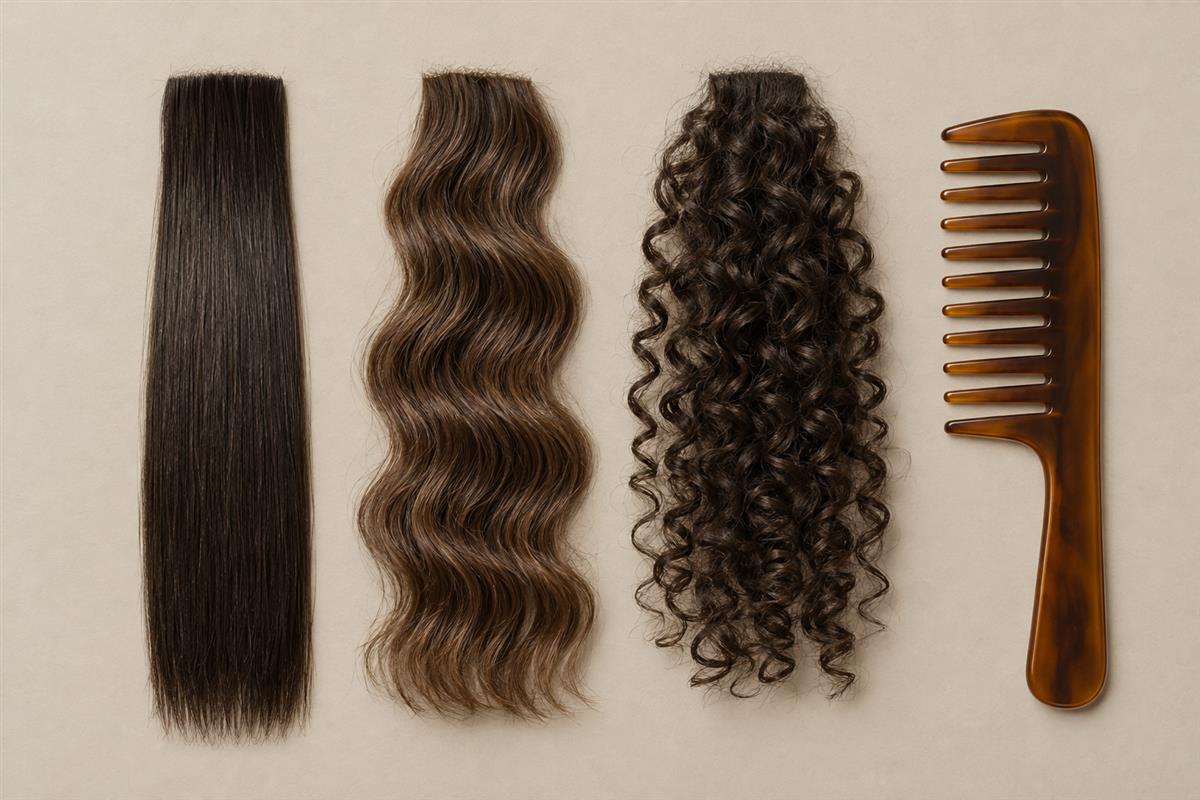
Hair may look straight, wavy, curly or form tighter coils. Several patterns can appear on one head, and their appearance changes with the cut, weather, moisture or styling products.
Observing your hair without comparing it to a perfect photograph can help you choose comfortable tools and habits. You do not need to fit a precise category to care for it well.
Observe the pattern after washing
Wash your hair using your usual routine and gently remove excess water with a soft towel without rubbing or twisting. Let it dry comfortably, avoiding straightening, braiding or changing your entire routine for this observation.
Look at several sections once dry. Straight hair often falls without marked curves; wavy hair may form an S shape; curly hair can form loops or spirals. These descriptions are guidelines and the transitions between them do not have exact boundaries.
Expect more than one shape
Strands near your face may have a different pattern from those at the nape. Length and weight also affect appearance: a short cut may show different curves from those you noticed when your hair was longer.
Heat, coloring and other processes can alter the appearance of some sections. Do not use a classification to diagnose damage or try to force every strand to look the same. Observe what helps you style your hair without discomfort.
Read also: How to choose shampoo for your hair and scalp.
Consider strand thickness and density
Thickness describes each individual strand and is not the same as the amount of hair. You may have many fine strands or fewer thick ones. Examine a section in natural light and consider how it responds to tools and products without pulling out hairs to measure them.
A small amount of product may be enough for fine hair, while a dense head of hair may be easier to care for in sections. These are possibilities, not universal rules: notice whether your hair feels weighed down, dry or comfortable.
Adapt your detangling approach
Divide hair into sections and start at the ends with your fingers or a wide-tooth comb, gradually working upward. Support the section without pulling your scalp and stop when you encounter resistance. Gently separate the knot before continuing.
Some people prefer to detangle curly hair while it is damp and conditioned; other textures may be easier to manage differently. Follow the product directions and choose the method that causes the least pulling. Avoid forceful brushing to impose a particular shape.
Choose products by their results
Start with shampoo for the scalp and conditioner on the lengths and ends if useful. Adjust the amount and frequency to how clean and comfortable your hair feels. A label for curls or straight hair does not by itself guarantee a formula will work for you.
If you try a styling cream, distribute a little through sections and follow the package directions. Notice the result after drying and again the next day. Hair that feels weighed down may need less product or a different texture.
Record changes and avoid tension
Note which tools, washing frequency and products leave your hair feeling comfortable. Compare several days rather than deciding from one observation. You do not need to purchase a complete product line or change your natural pattern for a practical routine.
Use accessories that do not pull and follow heat-tool instructions. If you have pain, persistent irritation or hair loss that concerns you, consult a health professional. The appearance of strands cannot diagnose a scalp condition.
Quick summary
- Observe several sections without forcing their shape.
- More than one pattern is normal.
- Hair density and individual strand thickness are different.
- Detangle gently and adjust products gradually.
- Consult a professional about persistent discomfort.