 STELABEAUTYAPP
How to detangle hair gently for beginners
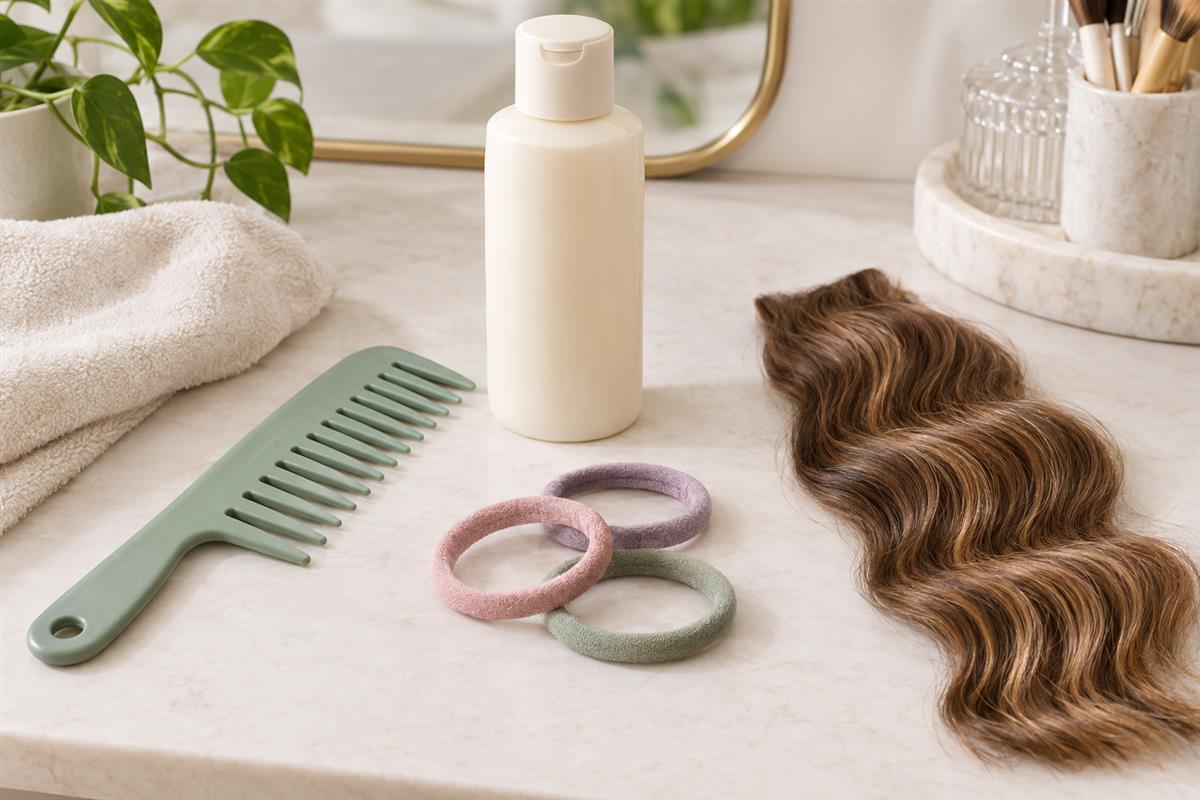
Detangling can be more comfortable when you work patiently and avoid pulling. The right tool, moisture and amount of product depend on your hair’s texture and condition.
This guide offers a simple way to start at the ends and work in sections. There is no single required routine: adapt each step to what feels comfortable for you.
Prepare a suitable tool
A wide-tooth comb can help separate strands; some flexible brushes are designed for detangling. Choose a tool without broken edges that moves through hair without scratching your scalp.
Clean the comb or brush regularly according to its manufacturer’s instructions. Remove trapped hair and let the tool dry before storage. Do not share tools when a scalp condition calls for extra precautions.
Consider moisture and conditioner
Some people with curls prefer to detangle damp, conditioned hair, while others find a different approach more comfortable. Wet hair may be vulnerable to tension, so avoid stretching or pulling it hard.
If you use conditioner or a leave-in product, check where to apply it and whether it must be rinsed. A small amount on the mid-lengths and ends may improve slip depending on the formula. You do not need several products at once.
Read also: How to choose and use hair conditioner.
Separate hair into manageable sections
Use your fingers to divide hair into two or more sections depending on its length and density. Hold the sections you are not working on with gentle clips that do not pull the scalp. A small section makes knots easier to see and control.
Hold the strand above the knot with one hand to reduce tension at the roots. Begin at the ends using your fingers or the tool. Do not drag a comb from the roots straight through a large knot.
Work from ends toward roots
Ease knots apart gradually using short movements. Once the ends move freely, work a little higher and repeat. Keep a gentle hold on the section and stop if you feel pain; the process should not require force.
For a difficult tangle, use your fingers to separate it into smaller pieces and consider a moderate amount of suitable conditioner. Start at the edge of the knot rather than forcing the comb through its center. Take a break if your hands get tired, then return to the same section without rushing. Avoid pulling quickly or cutting near the skin. Ask for help if you cannot work through it without pain.
Reduce new tangles
After washing, press out excess water with a soft towel rather than rubbing. A loose hairstyle or fabric accessories can help keep strands organized without continuous tension. Choose accessories that do not snag or pull on individual hairs.
Adjust detangling frequency to your texture and the way you wear your hair. Not every hair type needs the same brushing routine. If a method repeatedly pulls, change your tool or work in smaller sections.
When to seek guidance
If you have persistent pain, sores, significant irritation or hair loss that concerns you, consult a health professional. A cosmetic guide cannot identify the cause or replace an individual assessment.
Keep accessories clean and replace those with edges that catch hair. Stop using products that cause itching or burning. The goal is comfortable detangling, not achieving a texture or volume different from your own.
Quick summary
- Choose a clean tool without damaged edges.
- Adjust moisture and conditioner to your hair.
- Work in sections and support each strand.
- Begin at the ends and work upward gradually.
- Stop if there is pain and seek advice if it persists.