 STELABEAUTYAPP
How to choose and use hair conditioner
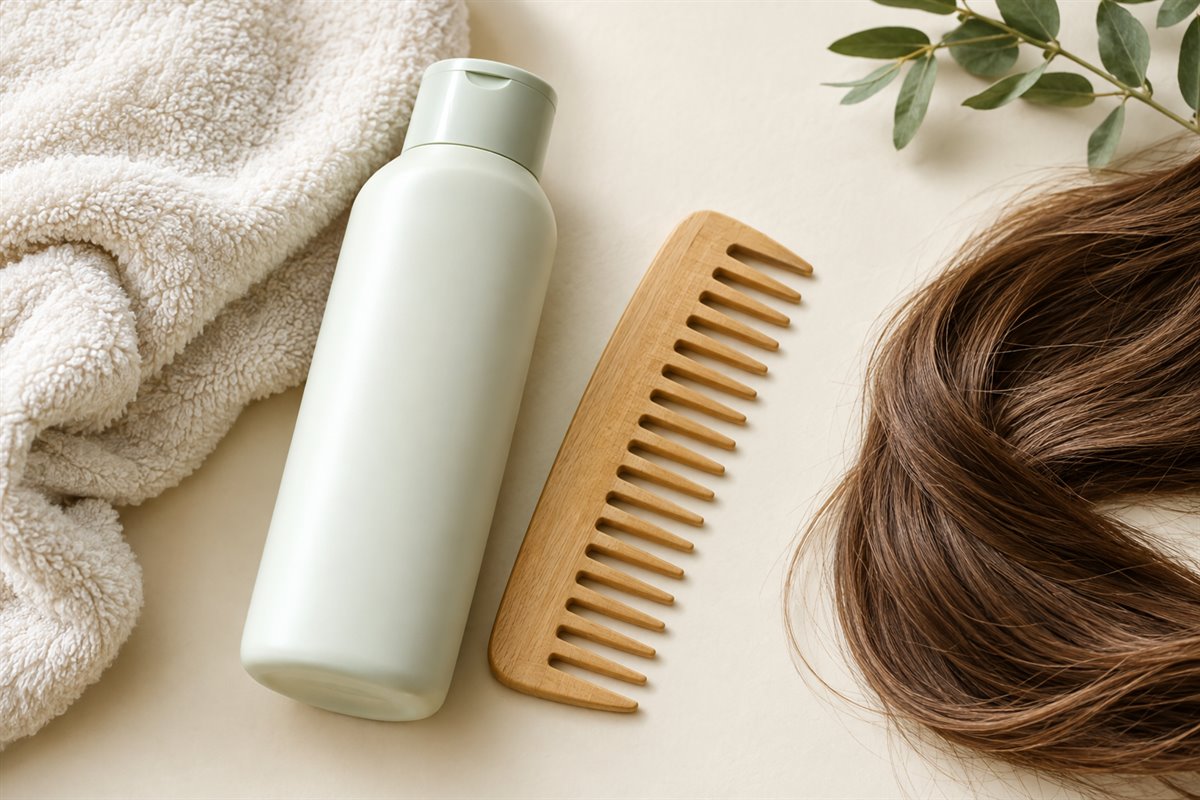
Conditioner can make detangling easier and temporarily improve how hair lengths feel after washing. Needs vary with texture, treatments and product amount, so notice how your own hair responds.
This guide explains how to compare formulas, apply and rinse conditioner, and adjust the amount without assuming every head of hair needs the same routine.
Observe the lengths and ends
After washing, notice whether your lengths tangle, the ends feel dry or your hair easily loses volume. You can have oily roots and dry ends at the same time: shampoo and conditioner have different roles in a routine.
Colored, curly or heat-treated hair may need extra care during detangling. These are general tendencies, not rules. If your scalp is painful or persistently irritated, consult a health professional.
Compare textures and formats
Conditioners include lightweight formulas, richer creams and leave-in products. A light formula may be pleasant if fine hair feels weighed down easily; a richer one may feel comfortable on dry lengths. Effects vary by brand and individual hair.
Read whether the product must be rinsed and how long it should stay on. A mask is another format with its own instructions; you do not necessarily need one at every wash. Choose based on comfort and ease of use.
Read also: How to choose shampoo for your hair and scalp.
Distribute where needed
After rinsing shampoo, gently press excess water out with your hands. Apply a moderate amount of conditioner to the mid-lengths and ends, where it is often most needed. Avoid the roots if the label directs or if product makes your scalp feel heavy.
For long or abundant hair, work in sections and add small amounts as needed. There is no need to begin with a large quantity. Distribute it gently without pulling. Follow the label if your conditioner is designed for a different application.
Detangle gently
If the formula and your hair allow it, use fingers or a wide-tooth comb to detangle while conditioner is applied. Start at the ends and move upward gradually, holding the section to reduce pulling on the roots.
Do not force knots or brush wet hair violently; it may be more fragile. Work in sections and take breaks when needed. Soft-tipped tools may feel more comfortable for some textures and hair lengths.
Rinse or leave in as directed
Respect the indicated time and rinse well if the product requires it. A leave-in conditioner has different instructions and should not be confused with a rinse-out formula. Start with a little and distribute it evenly.
If you notice residue, lack of volume or a sticky feel, check the amount and rinsing before buying another product. If skin irritation occurs, stop using it and seek advice if discomfort persists.
Review and complement your care
After several uses, notice whether hair detangles more easily and whether you like its finish once dry. Adjust the amount for length, season and treatments. Change one variable at a time to understand the result.
Conditioner can improve feel and appearance, but it cannot permanently repair chemical damage. Reduce friction and heat when practical, and follow your colorist’s directions if your hair has been colored or bleached.
If your hair feels coated, check that a rinse-out product has been rinsed thoroughly and compare the amount used on different sections. Keep the container closed between washes and follow its storage instructions.
Quick summary
- Consider roots and lengths separately.
- Choose a texture that feels comfortable.
- Apply mainly to mid-lengths and ends.
- Detangle from the ends without pulling.
- Rinse or leave in according to the label.