 STELABEAUTYAPP
Heatless hairstyles that respect your hair texture
Heatless hairstyles let you vary your look using braids, fabric accessories or gentle updos. They may not produce the same result as a straightener or curling tool, but can be a practical way to reduce heat exposure.
The shape and duration depend on texture, length and drying time. Try each option without pulling on the roots and choose what feels comfortable.
Prepare your hair gently
Start with clean hair or whatever suits your routine. If it is wet, press out excess water with a soft towel and detangle from the ends. Some styles work best on slightly damp hair, but let it dry completely before releasing them.
Apply a little styling product only if you wish and follow its label. Too much can extend drying time or leave residue. If your scalp is irritated, avoid accessories or styles that increase discomfort.
Try waves with loose braids
Divide hair into one or more sections and make loose braids, securing the ends with soft accessories. Larger sections generally create wider waves and smaller sections a more defined effect, although results depend on texture.
Allow hair to dry completely and release the braids gently. Separate waves with your fingers rather than brushing if you prefer to maintain definition. Do not pull the roots or keep a style that causes pain.
Read also: How to protect hair when using heat tools.
Use soft rollers or fabric bands
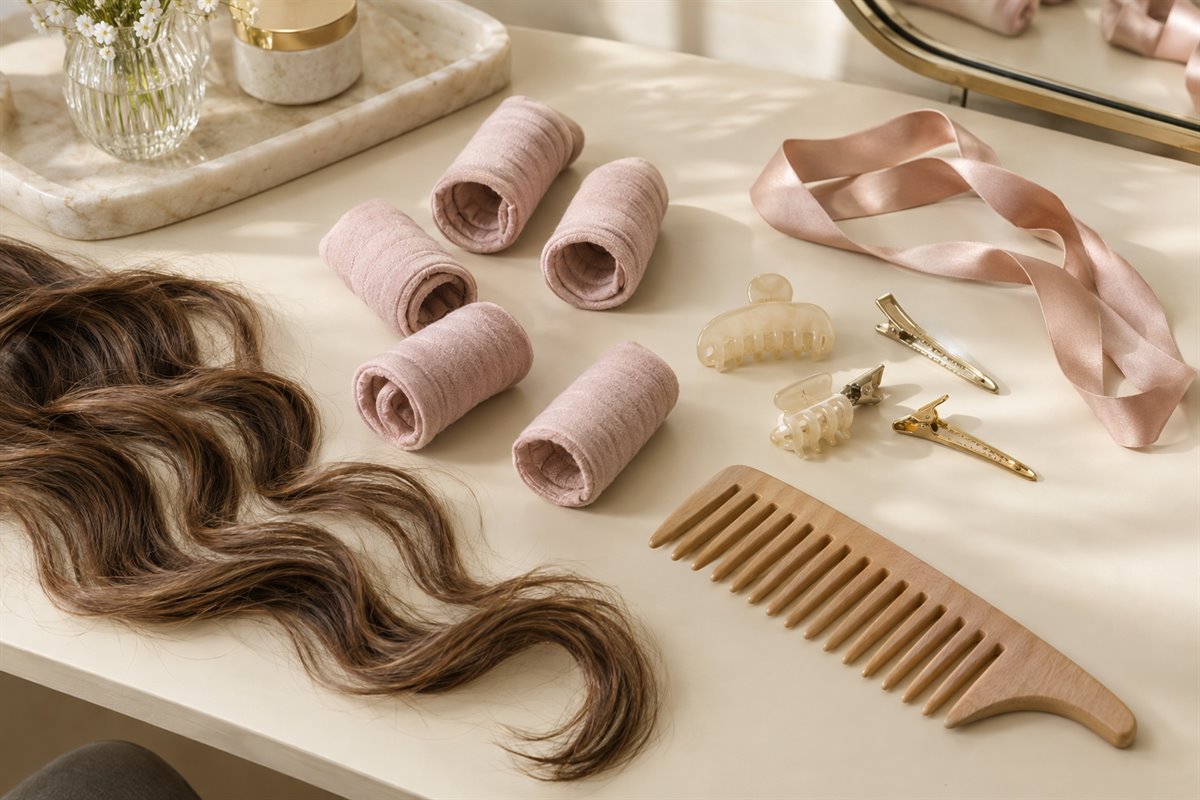
Soft rollers or a fabric band can create waves without heat. Wrap small sections evenly and secure the accessory without pulling. Follow product instructions and adapt the section size to your hair length.
Wait until hair is dry before removing the accessories. If a band is uncomfortable for sleep, use it during the day or choose another method. Avoid clips with edges that snag or break hair.
Make comfortable updos
A low ponytail, loose bun or simple braid can keep hair gathered without hot tools. Use soft ties and change the position of the style so the same place is not under tension every day.
If you feel tightness, headache or pressure on the scalp, loosen the style. You do not need to secure every loose strand. Leave sections free if you like and adapt the style to your activities.
Adjust the finish
After releasing hair, arrange sections with your fingers and look at the result in daylight. For more definition, try a small amount of suitable product; for volume, separate gently without pulling the ends.
Humidity and hair type affect how long a style lasts. Rather than applying many layers of setting product, experiment with section size and drying time. Follow directions if using a spray and avoid inhaling it.
Care for accessories and hair
Wash or clean accessories according to their materials and allow them to dry before storage. Replace ties that snag and avoid sleeping in rigid clips that can cause discomfort. Keep combs clean and do not share personal tools.
Alternating styles can help avoid repeated tension at the roots. If you notice pain, irritation or hair loss that concerns you, consult a health professional. The best method respects your texture and feels comfortable.
Keep track of which accessories stay comfortable and which ones pull or slip. Trying one method at a time makes it easier to find a routine that fits your schedule and works with the natural movement of your hair.
Quick summary
- Detangle without pulling and use soft accessories.
- Try loose braids or fabric rollers.
- Let hair dry completely before releasing.
- Avoid updos that cause tension or pain.
- Clean accessories and adapt styles to your texture.