 STELABEAUTYAPP
How to organize cosmetics and check expiration
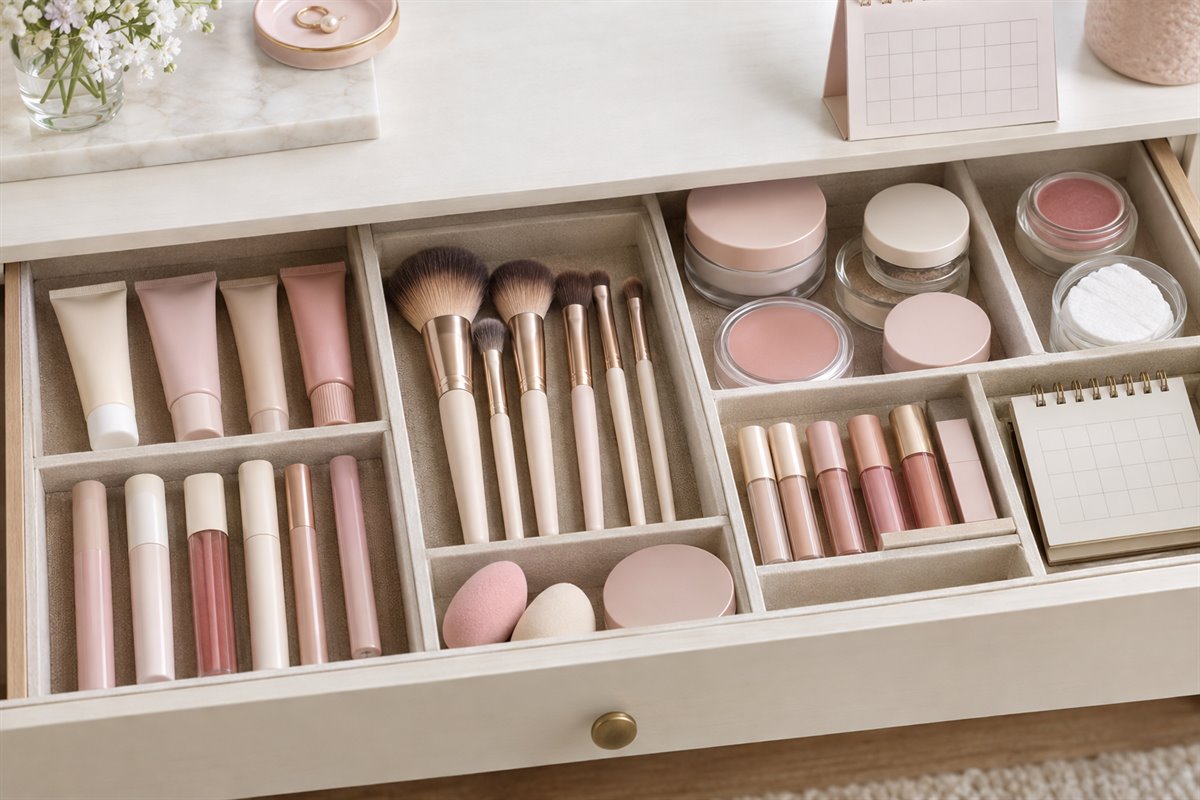
Organizing cosmetics makes it easier to find what you use and check whether each product remains in good condition. You do not need an expensive organizer: a clean box, a few dividers and a regular review can be enough to begin.
A printed expiration date and the recommended period after opening are important guidance, but use and storage also matter. A product can deteriorate before the printed date.
Gather and sort what you own
Place cosmetics on a clean surface and separate them by use: face, eyes, lips, skincare and tools. Check what you use frequently and what remains sealed. Avoid opening containers unnecessarily just to inspect them, since that starts exposing their contents to air and contact.
Clean the outside of containers according to each brand’s directions. Set brushes and sponges aside for washing and drying before returning them to the organizer. Remove damaged or leaking containers and do not mix their contents.
Understand dates and symbols
Some products show an expiration date; others have an open-jar symbol with a number and the letter M, indicating the recommended number of months after opening. Follow the label and brand directions. Not every container shows both, and regulations differ by country.
Write the opening date on a label or in your phone to help you remember. Sunscreen should be used within its expiration date and stored as directed. If you cannot find information, ask the manufacturer rather than inventing a safe date.
Read also: How to clean and dry your makeup brushes.
Look for deterioration
A noticeable change in smell, color or texture, unusual separation or visible mold is a reason to stop using a product. Do not try to fix it by adding water, saliva or perfume. Normal appearance alone also does not guarantee a cosmetic is free of contamination.
The U.S. Food and Drug Administration warns that heat, sunlight and poor storage can make a cosmetic deteriorate before its date. If you are unsure about a particular product, ask the brand and avoid applying it until you have clarity.
Pay special attention to eye products
Cosmetics used near the eyes deserve extra care because repeated contact can introduce microorganisms. The FDA notes that many manufacturers recommend replacing mascara two to four months after purchase. Follow the specific product instructions and never add water or saliva if it dries out.
Do not share mascara, eyeliner or other personal products. If you have an eye infection, stop using eye makeup, consult a health professional and discard products you were using when the infection occurred, as the FDA recommends.
Store products properly
Keep containers tightly closed in a clean, dry place away from heat and direct sun, following the label. A humid bathroom with changing temperatures may not be the best place for every product. Separate containers can prevent a leak from soiling everything else.
Store brushes completely dry and protect their tips from dust. When traveling, put liquids in individual bags and avoid leaving them in a hot car. Wash your hands before application and do not put dirty tools into containers.
Schedule reviews and shop intentionally
Set aside a few minutes each month to check dates, close containers and clean your organizer. Note what needs replacing and buy only what you will actually use. Fewer duplicates make it easier to finish products within the indicated period and reduce clutter.
For further information, see the FDA’s cosmetics shelf-life questions and answers at fda.gov. Also follow local rules for disposing of packaging and waste. If a product causes irritation, stop using it and consult a professional if discomfort continues.
Quick summary
- Sort products and note when you opened them.
- Follow the date or period after opening on the label.
- Discard deteriorated products; never add water or saliva.
- Pay special attention to eye cosmetics.
- Store containers closed, clean and away from heat.