 STELABEAUTYAPP
How to choose and apply blush for a natural finish
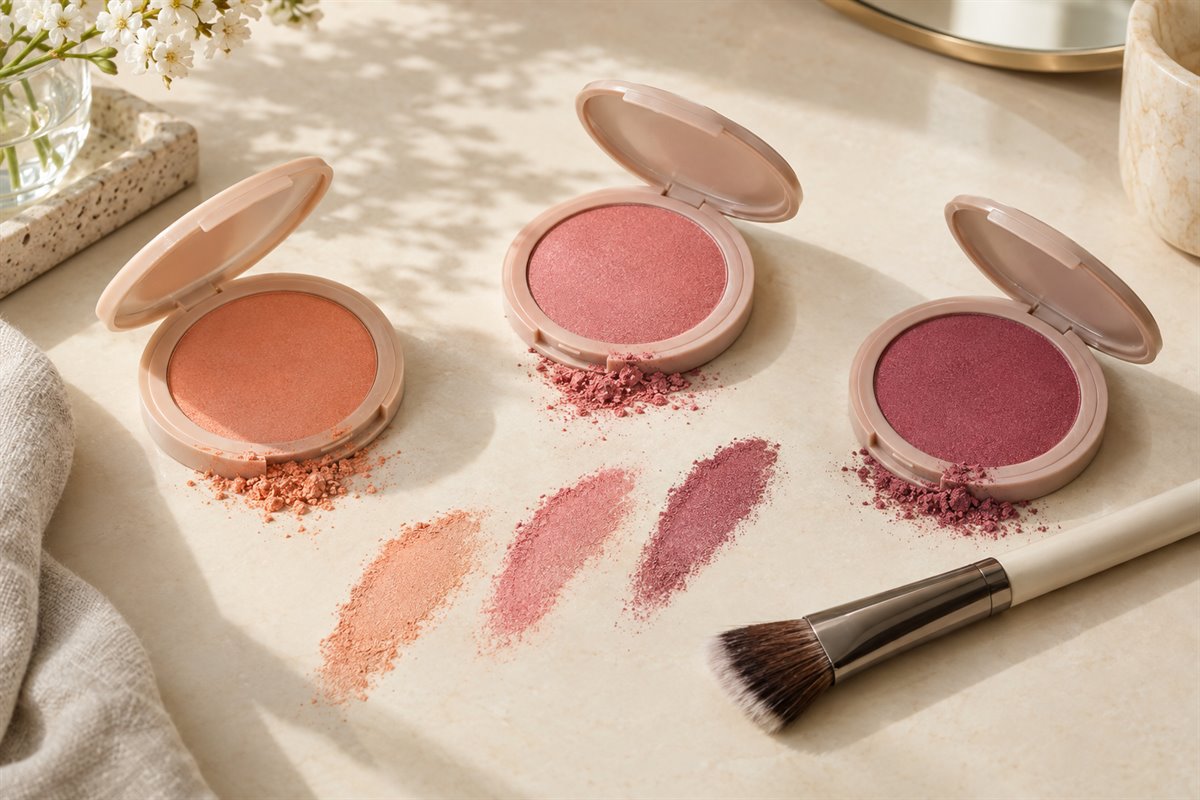
Blush adds color to the cheeks and can transform a simple makeup look. There is no single correct place to wear it: placement, shade and intensity depend on the effect you want and what feels comfortable. A light layer is an easy starting point because you can build color gradually.
Here we compare powder and cream blush, suggest application techniques and explain how to soften excess without starting again.
Choose a color family
Soft pinks, peaches, terracottas, reds and plums can work on different complexions. Try the undertone and intensity you enjoy. A more pigmented formula may show up more readily on deeper skin, while a thin layer can be enough on lighter skin. These are options, not limits on which colors you can wear.
Compare a small swatch in natural light and let it settle. Store images can look different on each screen. When shopping online, look at swatches on people with similar skin tones and check the return policy before deciding.
Pick powder, cream or liquid
Powder blush is usually applied with a brush and can be built in soft layers. Cream and liquid formats can be blended with clean fingers or a sponge and come in finishes from natural to luminous. Read the manufacturer’s instructions: texture and pigmentation vary between products.
Skin preparation also matters. If you wear liquid foundation, try cream blush before powder; if the face is already set, a powder formula may blend more easily. Experiment with a little product to avoid lifting the layer beneath it.
Read also: Everyday natural makeup step by step.
Prepare your skin and tool
Apply moisturizer and, during the day, sunscreen according to its label. You can wear foundation or put blush directly on prepared skin. Let products settle briefly and use clean hands, a soft brush or a clean sponge.
For powder, pick up a little and gently tap excess from the brush. For cream or liquid, put a dot on the back of a clean hand or directly on the cheek if the packaging allows it. Some formulas are highly pigmented, so start with less than you think you need.
Place and blend color
Find the upper part of your cheek and apply blush with light taps. Blend toward the temple for a lifted effect, or concentrate color at the center of the cheek for a rounder look. Change placement gradually and check the result from the front and side.
Soften the edges without dragging your foundation. A clean brush can diffuse powder; for cream, tap with a sponge. Compare both cheeks in daylight, but do not chase perfect symmetry: faces naturally have differences.
Adjust intensity and finish
If you applied too much, first blend with a clean tool. You can also lightly tap with the sponge you used for foundation, without adding much product, or add a thin layer of powder if that is already part of your routine. Avoid rubbing, which can move the makeup and create a patch.
For stronger color, add a small layer after blending the first. Some people combine cream and powder in similar colors for longer wear, though this is optional. Adjust the method to your skin and how long you need the makeup to last.
Make it yours and care for it
Pair blush with a lipstick or eyeshadow you enjoy; the shades do not have to match exactly. Soft color can complement stronger eye makeup, while a more noticeable blush can be the focus. A daylight photo can help you compare, though cameras may change the colors.
Close the container, do not share it and clean your brushes regularly. Follow the manufacturer’s instructions and discard a product if its smell or appearance changes noticeably. A virtual try-on can inspire choices, but real texture and color may differ.
Quick summary
- Choose a color you enjoy and test its intensity.
- Start with little product and build thin layers.
- Place color where you prefer and blend the edges.
- Soften excess with a clean tool.
- Keep cosmetics clean and closed.