 STELABEAUTYAPP
How to choose nail polish: a beginner guide
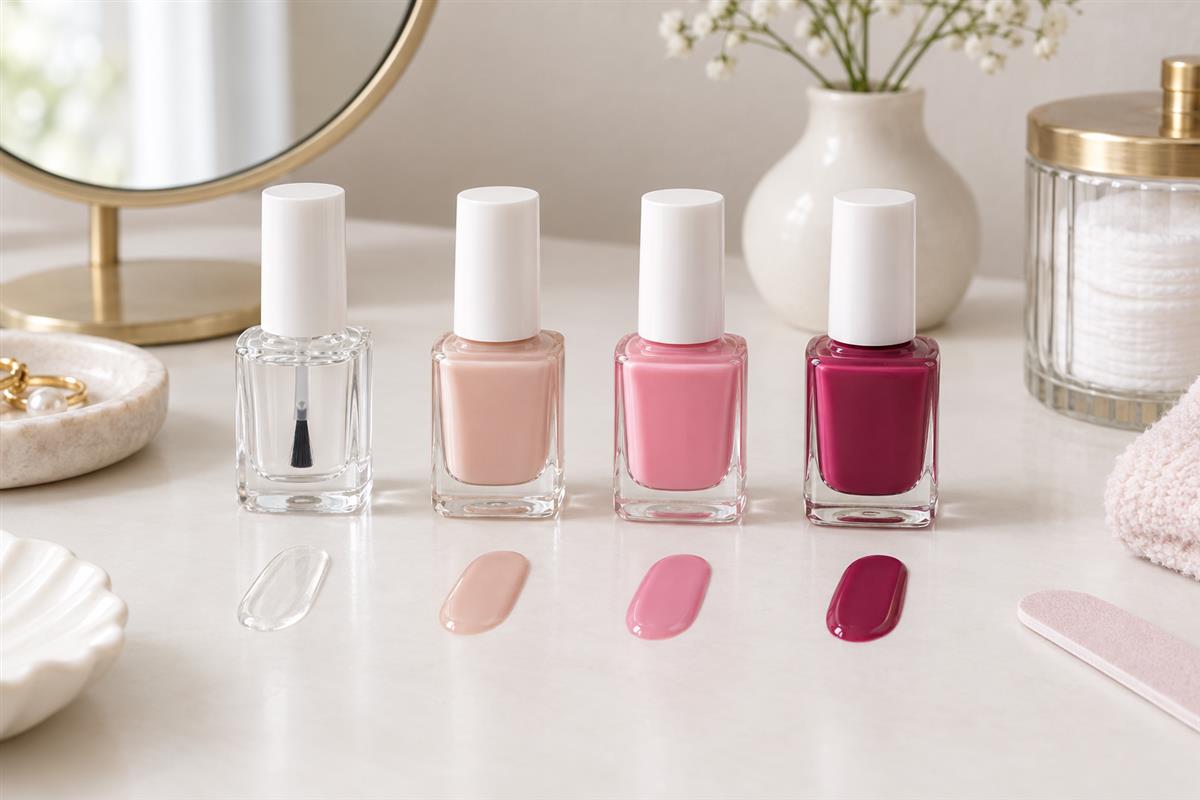
Choosing nail polish can be as simple as picking a color you enjoy. It is also useful to consider the finish, drying time and removal method, especially when you are starting.
This guide focuses on conventional nail polish and offers practical steps for trying it without assuming one formula or shade suits everyone.
Compare color and coverage
Clear or sheer colors allow some of the nail to show through, while opaque shades usually provide more coverage. A color can look different in the bottle and on the nail; a sample on one nail or a card may help you decide.
Look at the color in natural light and consider whether you want to touch up small chips easily. Light, dark and vivid shades can be worn with any skin tone: no combination is mandatory and no color is reserved for a particular occasion.
Choose a finish and format
Glossy polish reflects light; matte has less shine, and glitter formulas offer another effect. Products with particles may take more patience to remove. Check the label to see whether a special top coat is recommended.
When starting out, a brush you can control and a bottle that closes properly are more useful than many shades. Gel polish and other systems may require lamps or specific removal methods: follow their instructions and do not treat them like conventional polish.
Read also: A careful home manicure step by step.
Prepare nails and workspace
Work in a ventilated area away from flames and heat sources. Read warnings on both polish and remover, close containers after use and keep them away from young children. Avoid applying products to irritated skin or an injured nail.
Wash and dry your hands before starting. Shape the edge with a gentle file if needed and remove cream residue from the nail surface. You do not need to cut the cuticle or aggressively buff the nail to apply color.
Apply thin coats
If you use a base coat, follow its label and let it dry. Take a small amount of polish on the brush and apply a thin coat without touching skin. A second coat may improve coverage once the first is sufficiently dry.
A compatible top coat can provide the finish you want. Allow each layer to dry according to its directions: a surface that feels dry may still mark if you immediately resume activities. If the brush deposits too much, wipe excess against the bottle rim.
Remove without peeling
When you want to remove the color, use a suitable remover according to its label in a ventilated area. Rest a cotton pad on the nail briefly, then slide it gently without scraping or peeling the polish. Keep remover away from eyes and flames.
Wash your hands afterward and apply moisturizer if desired. If polish partly chips, avoid pulling it off: you can remove the rest or touch it up as you prefer. Special systems may need a different procedure specified by the manufacturer.
Store the product and watch your skin
Keep the bottle closed in the location indicated on its label. Do not add solvents or mix products on your own. If the smell, texture or color changes, or the container is damaged, consider disposing of it according to local rules for those products.
If itching, redness or discomfort appears, remove the polish and stop using it. Consult a health professional if the reaction is severe or persists. A beautiful design should not require ignoring pain or covering an injury.
Quick summary
- Choose the colors and finishes you enjoy.
- Read labels and work in a ventilated space.
- Apply thin coats on clean, dry nails.
- Remove polish without scraping or peeling.
- Stop using a product if irritation occurs.